Islam and Alcohol

Islam is clear and straightforward in its stance on alcohol. The prohibition of alcohol in Islam is mainly to preserve the sanctity and to safeguard the welfare of humans. Alcohol’s prohibition came in three stages during the Prophet’s time.
The first verse revealed pertaining to alcohol was in Chapter 2: Surat Al-Baqarah, verse 219:

“They ask you about intoxicants and games of chance. Say: In both of them there is a great sin and means of profit for men, and their sin is greater than their profit. And they ask you as to what they should spend. Say: What you can spare. Thus does Allah make clear to you the message, that you may ponder.”

Following the revelation, Muslims at that time began to understand that God disliked alcohol and similar drinks that could interfere with men’s judgment.
However, they were not absolutely forbidden at this stage. It was just a reminder from a loving God telling men that while they may find some commercial value or benefits in alcohol, the disadvantages far outweigh its benefits.
Here it is an intellectual discourse in which God was educating men about the concept of weighing between pros and cons in facing a problem so as to reach the best solution. He then ends the verse by highlighting the importance of thinking and deep reflection.
The second stage of prohibition was in Chapter 4: Surat An-Nisa’, verse 43 of the Holy Qur’an.
“O you who believe! Do not go near prayer when you are intoxicated until you know (well) what you say.”
This was a turning point for the Muslims to begin abstaining from alcohol around the times of prayers. Daily prayers are taken seriously as one of the five pillars of Islam and as the most significant way of being in contact with and in constant remembrance of God.
Allah wanted those who had faith in Him to be in the clearest and purest state of mind when humbling themselves before Him.
The third and final verse was in Chapter 5: Surat Al-Ma’idah, verse 91:
“O you who believe! Wine and the game of chance and idols and divining arrows are only the abomination of Satan’s handiwork. So shun each one of them that you may prosper.”
With the revelation of this strong and definite command, alcohol became officially forbidden in Islam.
Alcohol and intoxicants were grouped along with other undesirable practices that hinder men’s progress and empowerment such as gambling, worshipping idols and fortune telling.
Here Islam has come not to restrict men or deny their freedom but to liberate their minds from all kinds of undignified practices and superstitious beliefs.
Only with such true emancipation will men be able to realize their best potentials and make progress in a real sense, as the phrase referred by the Qur’an says: “that you may prosper.”
Islam wants to elevate men; instead of running away from problems, humans are taught to patiently face their problems, learn the correct life skills to handle them and understand that no obstacle in life is impossible to deal with. This is in support of verse 286 of Surat Al-Baqarah where God says,
“Allah does not burden a soul beyond that it can bear.”
Last but not least, social pressure in the dilemma of alcohol is tackled by Islam’s emphasis on the importance of knowledge and understanding before imitating or adopting a habit. In Chapter 17: Surat Al-‘Isra’, verse 36, God challenges men:
“Do not pursue that (matter) of which you have no knowledge, for ears, eyes, and heart all are accountable.”
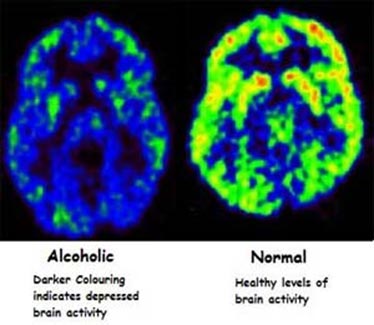
Here God clearly instructs men not to simply and blindly follow the crowd. Rather, He commands them to study, search and understand an issue before making conclusions or getting involved in something.
Whether the answer to the question: is alcoholism genetically inherited is yes or no or both yes and no, a ban on alcohol remains relevant. As for now, scientific findings supporting the genetic theory of alcoholism are uncertain and disputable according to some researchers in the field.
If one day it is ascertained that alcoholism is indeed a genetic predisposition, then the prohibition of alcoholism may become even more necessary to protect genetically susceptible groups from harming themselves through alcohol consumption.
There are two valid justifications for further study and research in this area. The first is to identify individuals who are genetically more vulnerable to alcoholism (considering the genetic assumption to be true) as a preventive measure against the disease.
The second is to design or formulate a therapeutic regimen or rehabilitation steps to cure alcoholics and problem drinkers by way of understanding the genetic makeup and manipulating it.