In 2012, I spent Ramadan in Cairo, Egypt. People call it the “City of a Thousand Minarets.”
In Cairo, the whole city changes for the holy month. Traffic thinned and shopkeepers closed their shutters.

As Maghrib approached, a quiet anticipation settled in the air. Then the adhan echoed from minaret to minaret, filling the city. In that shared moment, almost in unison, the fast would break. Soon after, the streets came alive again as everyone made their way to Taraweeh.
📚 Read Also: Ramadan: Time for Becoming Better Muslims
It was beautiful to be entirely immersed in the rhythm of a Muslim country.
Ramadan in Canada is different.
Here, Muslims are a minority. Ramadan does not surround you; you carry it inside you. You fast during a normal workday. You gently explain to your coworkers why you aren’t eating. You decorate your home so your children can feel the month. You find ways to enjoy the rhythm of Ramadan in a world that wasn’t designed for it.
And perhaps because of that, Ramadan here becomes something more. It becomes an opportunity for our community to open our doors and our hearts. To share a meal with our peers. To let our neighbors experience the beauty of this month for themselves. Allah tells us in the Qur’an:
{ يَا أَيُّهَا النَّاسُ إِنَّا خَلَقْنَاكُمْ مِنْ ذَكَرٍ وَأُنثَىٰ وَجَعَلْنَاكُمْ شُعُوبًا وَقَبَائِلَ لِتَعَارَفُوا ۚ إِنَّ أَكْرَمَكُمْ عِندَ اللَّهِ أَتْقَاكُمْ ۚ إِنَّ اللَّهَ عَلِيمٌ خَبِيرٌ }
“O mankind, We created you from a male and a female and made you peoples and tribes so that you may know one another. Indeed, the most noble of you in the sight of Allah is the most righteous among you. Indeed, Allah is All-Knowing, All-Aware.” (49:13)
Not so that we fear one another. Not so that we remain distant. But so that we take responsibility for knowing and being known.
For Muslims in Canada, that means embracing our identity with clarity, living our values with integrity, and sharing our faith and character with the society around us.
This year, four different iftars showed me what it means to truly “know one another” in Canada.
The Hospital

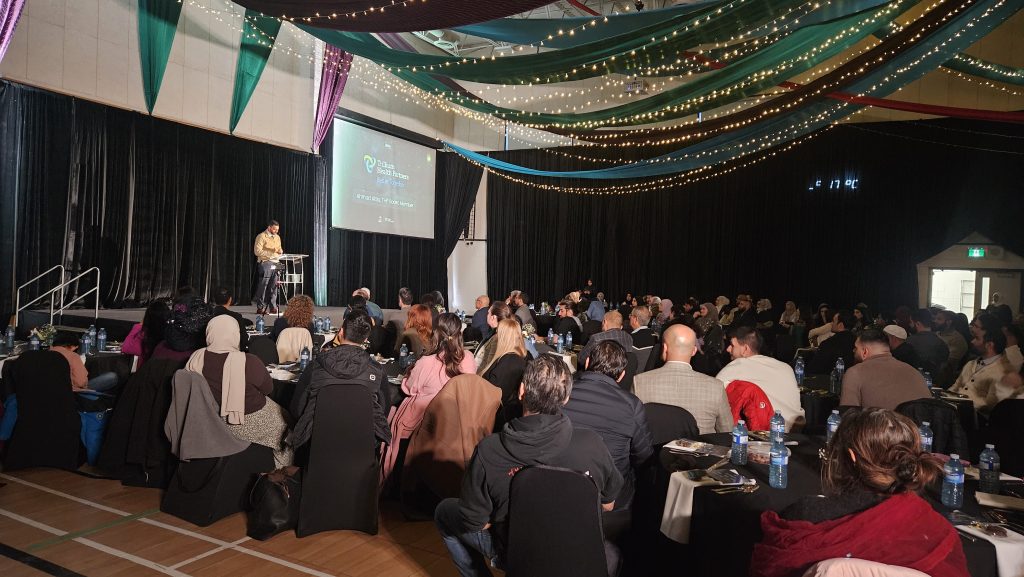
The first was in Mississauga, organized by ISNA Canada in partnership with Trillium Health Partners, the hospital system that serves our city, where I serve on the Board.
Nearly 20 percent of Mississauga’s population — close to 120,000 people — is Muslim. That reality is visible in the hospital’s waiting rooms, hallways, and staff lounges.
For several years, ISNA Canada has partnered with the hospital to host an annual iftar. We gather in the mosque gym, beautifully decorated for Ramadan. Hospital executives sit beside community leaders. Physicians beside chaplains. Frontline staff beside board members.
This year, the focus was spiritual care. ISNA provides chaplaincy services within the hospital, and the conversation centered on treating the whole person. Not just the diagnosis. Not just the chart. But understanding why, for Muslims, faith is central to how we endure pain and uncertainty. Understanding why a patient makes du‘a before surgery. Understanding why family presence and spiritual reassurance matter so deeply in moments of vulnerability.
That evening, I was reminded that knowing one another means inviting institutions to join in iftar so they may understand our faith and better support the people they serve.
Parliament Hill
The second iftar took place in Ottawa.
As the Muslim community has grown, it has taken on a more visible civic role. More than ten Muslim Members of Parliament now serve federally, alongside senators and many Muslim professionals across government.
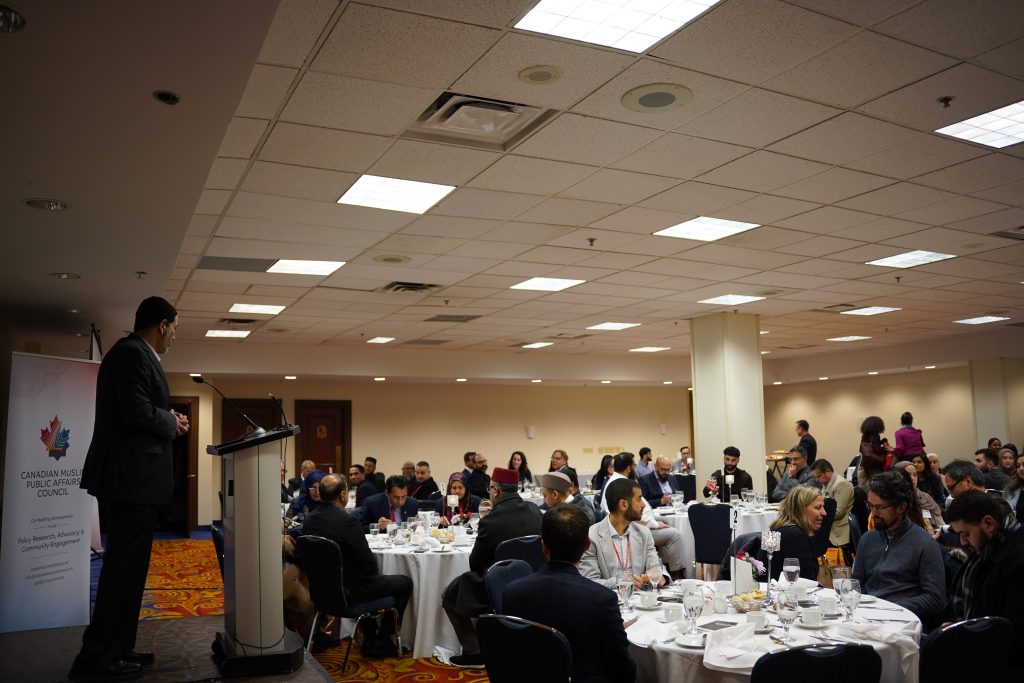
The Canadian Muslim Public Affairs Council hosted an iftar on Parliament Hill. Parliamentarians from different parties, senators, staff, and community leaders gathered together.
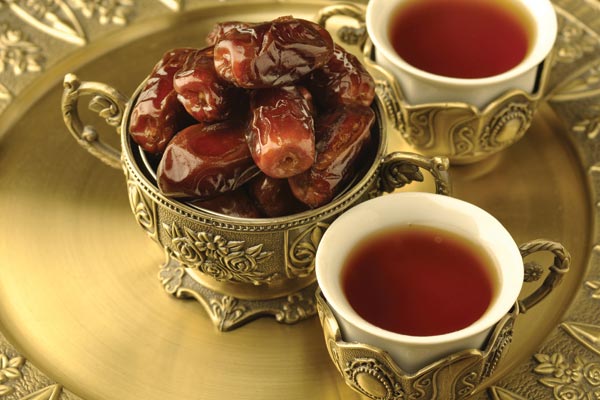
I watched political rivals sit side by side. I watched staffers enjoy chatting and eating without the pressures of the grind of a government day. I watched conversations that usually happen through policy papers unfold instead over dates and water.
Advocacy can reduce relationships to positions and votes. How will you vote? Where do you stand? But Ramadan softens the room. It reminds us that before we are politicians or advocates, we are all Canadians who love their country.
The Prophet ﷺ did not isolate himself from society in Madinah. He built relationships across tribes and faith communities. The Constitution of Madinah was not only a political document, it was a model of coexistence rooted in justice and mutual responsibility.
That evening reminded me that knowing one another means inviting politicians to iftar, allowing us to put politics aside for a moment and remember that we all care about this country.
City Hall
The third iftar took place in Brampton.
For more than a decade, Mayor Patrick Brown has fasted with Muslim communities. Since becoming Mayor, he has hosted an annual iftar bringing together city councillors, staff, police services, and faith leaders.
This year he spoke about supporting mosques in their growth, combating Islamophobia, and leading national opposition to legislation like Bill 21 that restricts Muslim women from wearing hijab in public institutions.
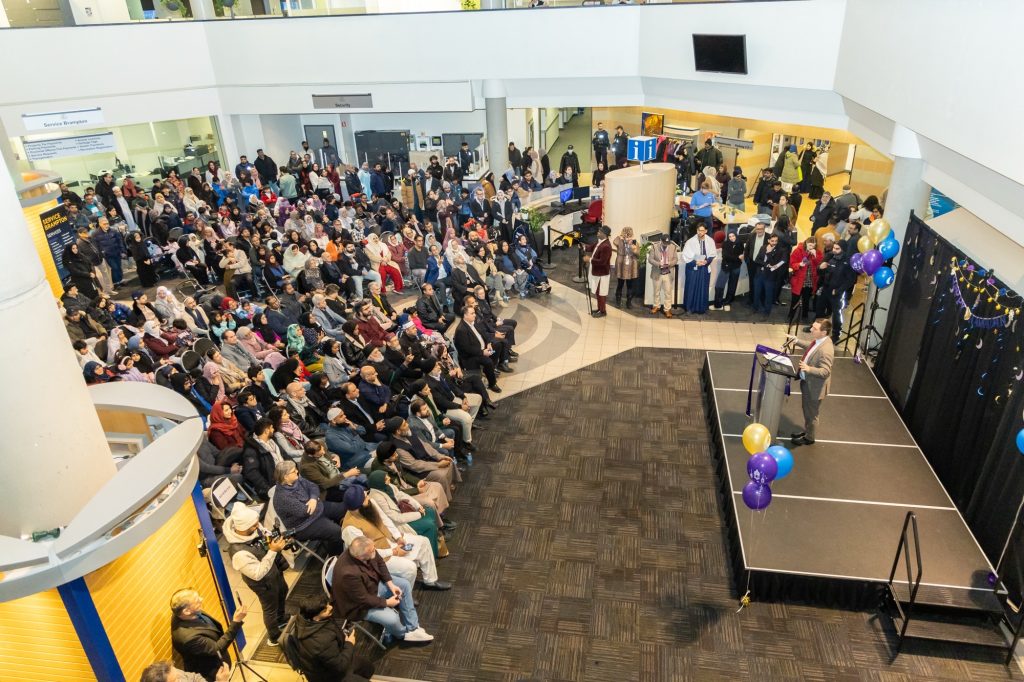
But what made Mayor Patrick Brown’s iftar especially meaningful was the launch of Ramadan lights, an initiative led by Muslim high school students to display “Ramadan Mubarak” lights in city squares. Similar lights were placed in Toronto, Ottawa, and Mississauga.
Seeing young Muslims publicly celebrate their faith, supported by civic leadership, was moving.
That evening, I was reminded that knowing one another means joining others to break their fast with you so our children see their faith reflected in the city they call home.
A Living Room
The fourth iftar was more intimate.
A friend opened his home to support Nisa Foundation, which serves women and children escaping domestic abuse. In his living room, we heard stories of women rebuilding their lives and children finding safety.
It was raw. It was humbling.
Iftar in that home reminded me that our communities are not immune to hardship. We face the same vulnerabilities as any society. But faith demands response. The Prophet ﷺ said, “None of you truly believes until he loves for his brother what he loves for himself.”
That evening, I was reminded that knowing one another means inviting others to break their fast with you so their hearts soften to the pain of others and they are inspired to act.
A mosque gym. Parliament Hill. City Hall. A living room.
Different spaces. One shared spirit.
Ramadan in Canada teaches us that faith cannot remain confined to our homes or mosques. It must enter hospitals. Engage government. Light up public spaces. Respond to social challenges.
But diversity only thrives with understanding. And understanding happens when people sit together. When they listen. When they break fast at maghrib together and recognize the humanity in one another.
That is how we live the verse and fulfill “so that you may know one another.”
This is our Ramadan.
Not only a month of fasting.
Not only a month of prayer.
Ramadan, perhaps more than any other time of year, gives us that opportunity to truly know one another as Allah SWT commanded.