Answer

In the Name of Allah, Most Gracious, Most Merciful.
All praise and thanks are due to Allah, and peace and blessings be upon His Messenger.

In this fatwa:
1- The changing landscape of social interaction due to Coronavirus (COVID-19) pandemic and the availability of efficient electronic means of communication should NOT have an impact on the Islamic rituals of all kinds.
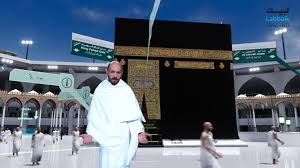
2- The “virtual Hajj” is a good idea only for educational purposes only. It cannot be a substitute to an in-person hajj experience.
Answering your question, Dr. Jasser Auda, Professor and Al-Shatibi Chair of Maqasid Studies at the International Peace College South Africa, states:
Virtual Hajj

The “virtual Hajj” is a good idea only for educational purposes. Virtual hajj cannot be a substitute to an in-person hajj experience.
The idea is not new anyways. Many Islamic schools around the world use virtual and non-virtual means to teach students about Hajj, Umrah, as well as prayers and fasting.
However, the changing landscape of social interaction due to Coronavirus (COVID-19) pandemic and the availability of efficient electronic means of communication should NOT have an impact on the Islamic rituals of all kinds.
Live Islam in a physical and social way
I can learn about prayers virtually. But to pray in Islam, I have to do the exact physical – not virtual – moves. I have to go to a mosque – not a virtual “space” – in order to pray. I have to live Islam in a physical and social way.
The directed and pre-planned interaction of social media restricts the spiritual and social purposes of the Islamic collective acts of worship.
It is an integral part of Islam to be where the prophets were physically. We have to remember their legacy collectively and say: “Allah! Here we come!” (Labbayk-Allah!). The Ummah should feel it’s unity and diversity through the random and casual interaction of the pilgrims.

You should interact with the poor and the needy and offer them your physical – not virtual – smile. You should say a good word that suits the casual conversation as you give them your charity; not just give them a click on your credit card account on your screen while you’re sitting on your coach at home!
You should learn from mixing with fellow Muslims, scholars, activists and Quran reciters when you go to a mosque or an Islamic organizations.
As a Muslim, you should observe and learn from their behavior and good conduct; not just see their picture on the screen of your phone without observing who they are and what they do.
It is an objective in Islam in its own right that a husband and wife interact physically and exchange love and mercy physically, something which obviously cannot happen via phone screens!
📚 Read Also: 7 Tips on How to Celebrate a Virtual Eid
In other words, we have to insist to live Islam in reality – not virtually. We can use electronic means in times of pandemics or exceptional cases of travel, in order to get some necessary business done. However, we should reject the “virtualization” and “commercialization” of Islam and Muslim life, and especially when it comes to Islam’s most fundamental acts of worship.
Almighty Allah knows best.